
Leaders often think of power as something that comes with the role. You have the title. You have decision-making authority. People report to you. When you set a direction, people move. But are they moving because they believe in the direction, or because you have the authority to tell them to? That distinction matters more than many leaders realize.
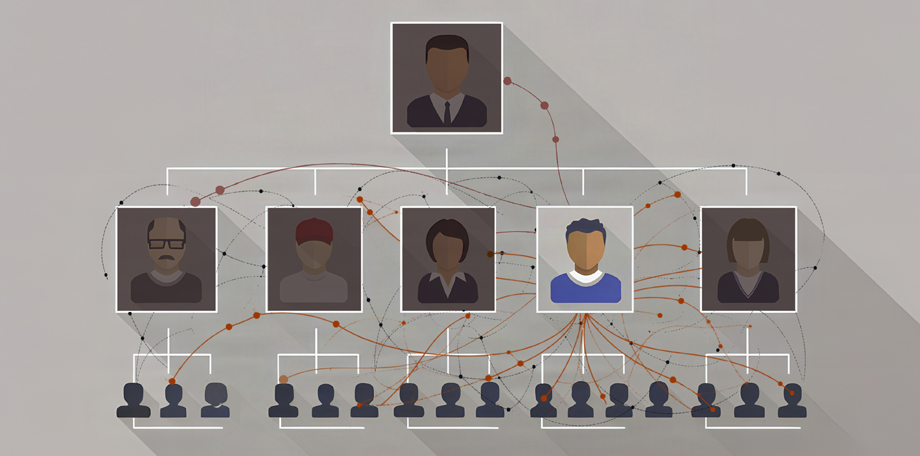
Some executives hold tremendous positional authority yet rely heavily on force to get results. They create urgency, apply pressure, or make questioning them difficult. People respond because they must. Meanwhile, someone with far less formal authority may have enormous influence. People trust their judgment, seek their perspective, and reconsider their assumptions when that person speaks.
One has authority. The other has earned influence.
And increasingly, leaders need both. A recent Harvard Business Review article on wielding influence without authority points out that even accomplished leaders eventually need to mobilize people they don’t directly control or influence decisions and resources outside their authority.
The higher you rise, the more authority you may have, but authority alone does not become a more effective source of influence. Positional authority can compel action. It cannot manufacture trust or commitment.
Power Creates Commitment. Force Creates Compliance.
Force can be remarkably effective in the short term.
A leader says, “I need this today,” and people jump. Problems are escalated. Messages receive immediate responses. People work late. From the outside, it can look like an exceptionally accountable, high-performing organization.
But there is an important question underneath all that activity: Would people move this way if the leader didn’t have the title? If the answer is no, what looks like influence may actually be compliance.
Real power operates differently. It is earned through credibility, consistency, trust, and relationships. People voluntarily follow someone because they believe in that person’s judgment and intentions. These leaders create meaning around why something matters. They have the courage to say what others won’t. And they can mobilize cooperation without relying on hierarchy to make it happen.
That doesn’t mean leaders shouldn’t exercise authority. Leadership requires making decisions, setting expectations, and holding people accountable. But there is a significant difference between using authority and depending on it.
When Everything Becomes Urgent
I worked with a CEO who was extraordinarily smart, demanding and highly reactive. His communication frequently sounded like this:
I need this today. Why hasn’t this already been handled? This is urgent.
Initially, the organization responded exactly as you might expect. People reacted. Leaders worked late. Problems were resolved as quickly as possible.
It looked like momentum.
Over time, however, nearly everything became urgent. The organization lost its ability to distinguish between a true enterprise-level priority and something that had simply activated the CEO in the moment. People were exhausted, and leaders were being pulled away from work they had already determined was most important to the business.
At one point in our coaching, I told him, “You’re no longer managing the business. You’re managing your nervous system.”
His authority allowed him to transfer his anxiety directly into the organization. If something felt urgent to him, everyone else experienced it as urgent too.
He needed to learn to pause and ask: Is this genuinely an emergency that warrants immediate organizational attention, or is this emotionally activating for me?
That’s a very different question than: How quickly can I get everyone to respond?
When Influence Pushes Back on Authority
Then something interesting began happening inside his leadership team.
A couple of highly influential executives stopped automatically reacting to every new demand. Instead, they began talking with one another across functions. They compared what they were seeing and recognized that continually changing courses was pulling the organization out of alignment.
Their influence spread.
Eventually, the leadership team developed the courage to tell the CEO, collectively, that the pattern wasn’t working. They would continue focusing on established priorities unless there was a compelling business reason to change them. When new urgent requests came down, they would ask questions rather than automatically react.
None of these executives individually had the hierarchical authority to overrule the CEO. But they had something else: credibility with one another and the courage to use it.
They trusted one another’s judgment. They could mobilize cooperation across functions. And together, they were willing to have a difficult conversation because the health of the organization required it.
Their influence ultimately helped change the CEO’s behavior and the way the leadership team operated. This is what leaders miss when they assume the organizational chart tells them where power resides.
Take away everyone’s title for a moment:
- Who do people instinctively consult when something important is at stake?
- Who hears about problems early?
- Whose perspective causes others to reconsider?
- Who remains steady when uncertainty increases?
- Who is willing to tell the truth when everyone else is carefully managing the message?
Those people often hold tremendous organizational power because they have something hierarchy can’t manufacture: earned trust.
Related: Effective Leadership: Keeping Power in Perspective
When Leaders Underestimate Their Own Power
There is another side to the equation. Leaders can also underestimate how much power their position carries.
I coached another senior leader who was highly relational and collaborative. He saw himself as one of the team and frequently thought aloud in meetings. He might casually question an idea or say, “Maybe we should reorganize this.”
Before his promotion, those comments were simply part of a collaborative discussion. After his promotion, they landed very differently.
His team began acting on passing thoughts as if they were directives. People devoted time to things he hadn’t actually prioritized because he didn’t recognize that seniority amplifies language.
He wasn’t being forceful. The problem was almost the opposite. He wasn’t being intentional enough about the authority attached to his role.
He needed to become much clearer about what he was doing in the moment: I’m thinking out loud. I want you to explore this. I want your input. I’ve made a decision, and here’s what we’re going to do.
Without that clarity, the team was left to interpret every comment, and his title did the interpreting for him.
Mature leadership requires understanding both sides of the power equation. Your title does not automatically give you genuine influence, but it does give your words weight.
Power Looks in the Mirror
Perhaps the most significant difference between power and force is where a leader looks when something isn’t working.
Force tends to look outward:
- People need to be more accountable.
- The team is too resistant.
- The board keeps interfering.
- I don’t have the right people.
Power looks inward first:
- What conditions have I helped create?
- What behavior am I tolerating or reinforcing?
- What have I failed to make clear?
- Where have I trained people to depend on me when I should be empowering them?
This is a profound shift, and it’s one I work on constantly with leaders. It requires curiosity instead of defensiveness.
A force-oriented leader often treats feedback like a case to be argued. Criticism gets explained away. Data is disputed. Motives are questioned.
A powerful leader can say, “I think I misread that,” or “My reaction just made it harder for you to speak candidly. Let’s rewind. Tell me what you really think.”
That isn’t giving up authority. It’s accountability. And it gives leaders access to better information, stronger relationships, and ultimately better decisions.
What Kind of Power Are You Building?
Many leaders view power as something to demonstrate, protect, or exercise. But mature leadership isn’t about continually proving that you’re in charge.
It’s about understanding the authority your role gives you without confusing it with influence. It’s recognizing where real influence exists throughout your organization and not feeling threatened by it. And it’s understanding the impact you have on other people, even when you don’t intend to exercise that power.
Most importantly, the real measure of your power isn’t how quickly people respond when you issue a directive. It’s whether people trust your leadership enough to follow when they have a choice.
Ask yourself:
- If my title disappeared tomorrow, how much influence would I still have?
- Do people bring me uncomfortable information, or have I trained them to tell me what I want to hear?
- Who are the people others genuinely trust and follow in this organization?
- Am I creating commitment, or am I relying on compliance?
- When something isn’t working, do I look first for someone to blame or for my own contribution to the problem?
An organizational chart can tell you who has authority. It can’t tell you who has earned trust, whose judgment carries weight or who people will follow when the path forward becomes uncertain.
Understanding that difference is one of the most important ways a leader can learn to see an organization as it actually is.
Executive coaching helps leaders uncover the patterns and blind spots that shape how they lead, influence, and make decisions. By developing greater self-awareness and accountability, leaders can move beyond positional authority and build the kind of influence that creates genuine commitment.